 listicle
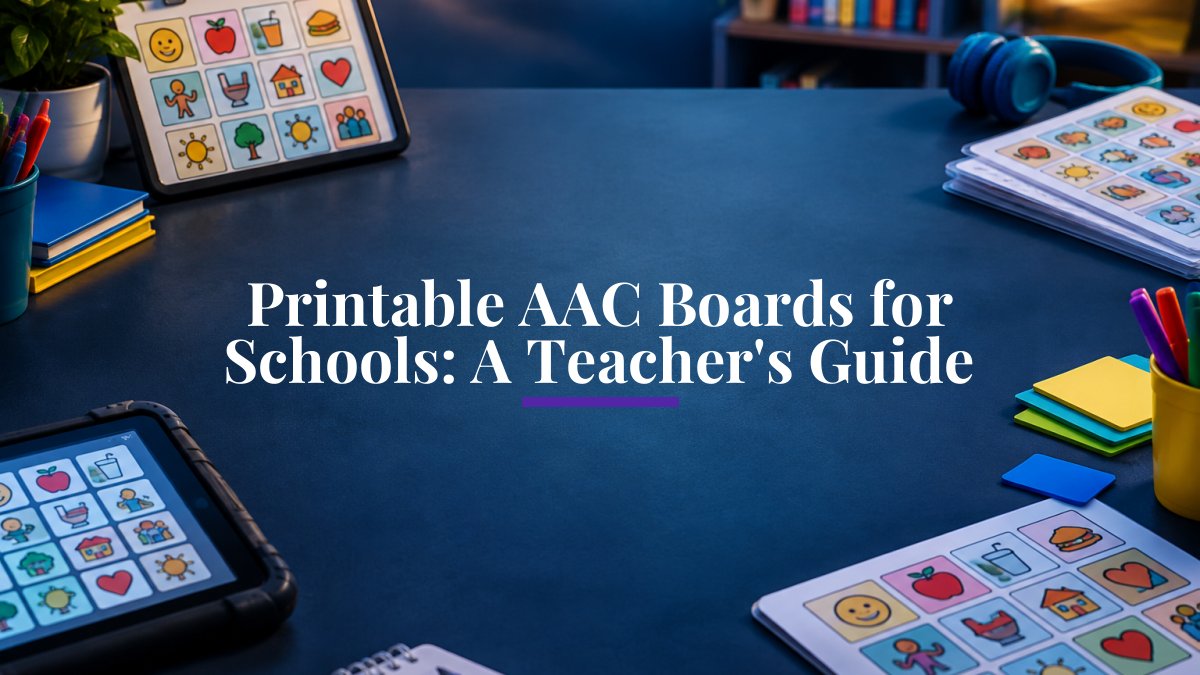
Printable AAC Boards for Schools: A Teacher's Guide
Last Updated: November 4, 2026
Quick Summary
Printable AAC boards for schools give students a way to express needs, choices, and ideas without waiting for a device. A good board fits the routine, matches the student's vocabulary level, and is easy to print, share, and replace. Start with core vocabulary like go, more, help, and stop, then place boards where each routine happens.
- Keep boards within arm's reach in the room, not filed away in a cabinet.
- Print routine-specific boards instead of one generic board for the whole room.
- Model by pointing to symbols while you talk, then pause to give the student a turn.
- Model without demanding a response, and keep it playful rather than test-like.
- Paraprofessionals can model consistently when they use the same board and short phrases as the teacher.
Table of Contents
- Printable AAC Communication Boards for Schools: What to Look For
- AAC Boards for Classroom Routines and Everyday Lessons
- AAC Modeling in the Classroom: Helping Adults Show the Way
- Frequently Asked Questions
Printable AAC Communication Boards for Schools: What to Look For
Printable AAC communication boards for schools give students a way to express needs, choices, and ideas without waiting for a device. A good board fits the routine, matches the student's vocabulary level, and is easy to print, share, and replace.
Here is what matters most when you evaluate a board for your classroom:
- Core vocabulary first. A printable core word board with high-frequency words like "go," "more," "help," and "stop" covers most messages across the day.
- Clear layout and symbol size. Symbols should be large enough for pointing and spaced so a student can select accurately.
The CueSprout Educator Hub offers free modeling tips, routine examples, and a quick-start guide to help you judge and use boards well.
AAC Boards for Classroom Routines and Everyday Lessons
The best AAC boards for classroom routines are the ones that live where the routine happens. A morning meeting board, a snack board, and a math board each carry the words a student needs at that moment. Keep boards within arm's reach, not filed in a cabinet.
Try these placements:
- Circle time: a board with "hello," "my turn," "finished," and "again."
- Literacy block: story words plus "read," "turn page," and "favorite part."
- Math: "more," "same," "count," and "help."
- Hallway and recess: a lite-tech communication board for "play," "stop," "wait," and "friend."
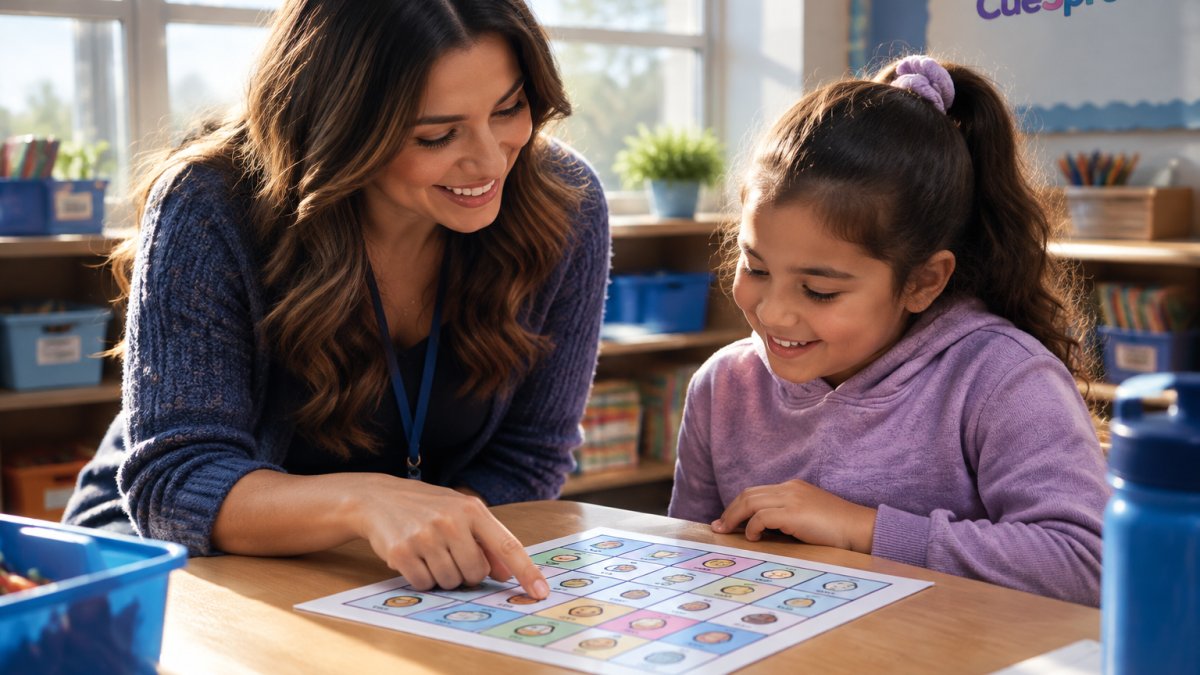
Teachers who want more visual support ideas can browse AAC visual supports for elementary students. If you are planning instruction around a board, AAC lesson plan templates pair well with everyday lessons.
Watch out: printing one generic board for the whole room often means no student gets the words they actually need. Match the board to the routine and the learner.
Here is where each routine board fits and the words it should carry.
| Routine | Board words |
|---|---|
| Circle time | hello, my turn, finished, again |
| Literacy block | story words, read, turn page, favorite part |
| Math | more, same, count, help |
| Hallway and recess | play, stop, wait, friend |
AAC Modeling in the Classroom: Helping Adults Show the Way
AAC modeling in the classroom means adults point to symbols while they talk, showing students how the board works. You do not need formal training to start. Point to "look" while you say "look," and pause to give the student a turn.
Paraprofessionals can model consistently alongside the lead teacher when both use the same board and the same short phrases. For ready-made strategies, see how to use AAC modeling strategies as a paraprofessional. Teachers who want a quick starting point can grab 5 easy ways to model AAC during the school day.
A common mistake is treating modeling as a test. It is not. Model without demanding a response, and keep it playful.
Frequently Asked Questions
Where can teachers find printable AAC communication boards?
Many free options exist, including core boards from AAC companies and collections of paper-based boards shared by school teams. CueSprout offers ready-to-use AAC boards alongside adult modeling guides and planning forms, so you can print and use them right away. Whichever source you choose, check that the board matches your student's vocabulary level and that you have permission to print multiple copies for classroom use.
What should a classroom AAC communication board include?
A good board centers on core words like go, stop, more, help, and want, plus a few activity-specific words for the lesson. Keep the layout consistent so students can find symbols in the same place each time. Add pictures or symbols that match the student's system, and leave space for personal words. Boards that are easy to read and simple to point to work best for quick communication during class.
How do you model AAC during classroom activities?
Point to symbols on the board as you speak, using short phrases like 'want more' or 'help me' during real moments, such as snack time or a math game. Model without asking the student to repeat. Keep sessions brief and frequent, and let paraprofessionals use the same board so everyone gives consistent examples. Modeling shows students how communication works and builds their confidence to try it themselves.
Every classroom has a student whose voice is waiting for the right support. CueSprout offers ready-to-use AAC printables, adult modeling guides, and planning forms that reduce prep time and give teachers and paraprofessionals a shared starting point. Get started with CueSprout and bring communication into every lesson.